Padelradar

The 9 bestpadel rackets for beginners

Your first padel racket: nine beginner models with a soft core and a large sweet spot, compared on power, control, comfort, sweet spot and handling.

Updated: November 2026By Timo, PadelradarNot a lab test — a comparison built from product data and reviews

Above all, your first padel racket should forgive your mistakes. When you're starting out, you rarely hit the ball right in the centre. A soft, round or teardrop-shaped racket still gets it over the net and is easy on your arm while it does. A pro racket with a hard core does exactly the opposite.

For this list I looked at every beginner racket in my comparison of 48 current models and picked the nine best. All of them have a fibreglass face, almost all have a soft core, and none costs more than €135. If you've only just taken up padel, my article with padel tips for beginners is worth a read too.

Compare them all

Tap a column to sort, filter for what you need and pick up to three products to compare side by side.

Level
Shape
ShapeWeightBalanceFeelFace
1BullpadelIonic Lightapprox. €116Hybrid350–360 g–SoftGlaphite (Glasfaser-Graphit)68889
2NoxEquation Soft Advancedapprox. €135Round350–365 gLowSoftGlasfaser68989
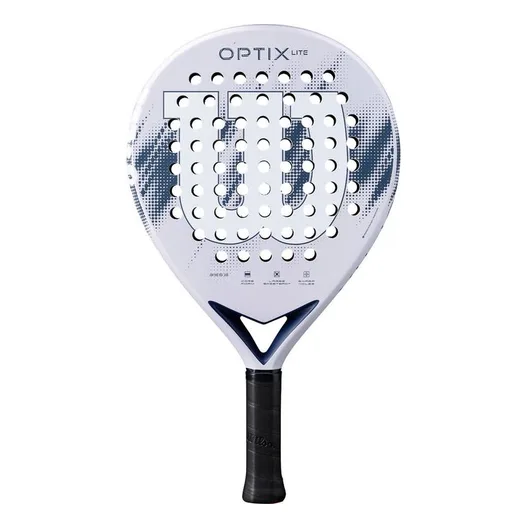
3WilsonOptix V2 Liteapprox. €90Round350–360 g–SoftGlasfaser67999
4DunlopFX Startapprox. €80Teardrop360–370 gMediumSoftGlasfaser68998
5HEADEvo Extremeapprox. €70Teardrop355–365 gMediumMediumGlasfaser67777
6BullpadelIndiga CTRapprox. €70Round360–370 gLowSoftPolyglass (Glasfaser)67877
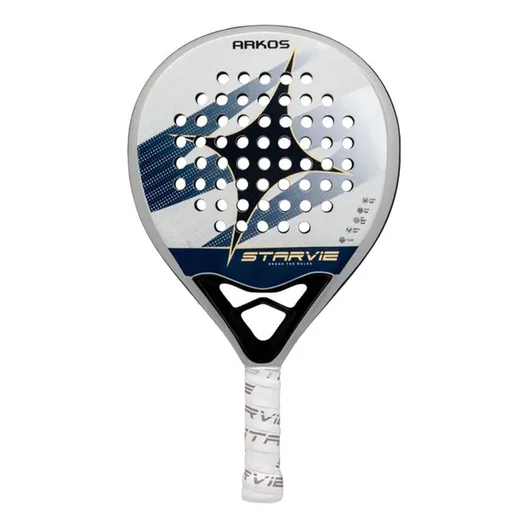
7Star VieArkosapprox. €90Round350–366 gLowSoftGlasfaser (X-Glass Tech)57977
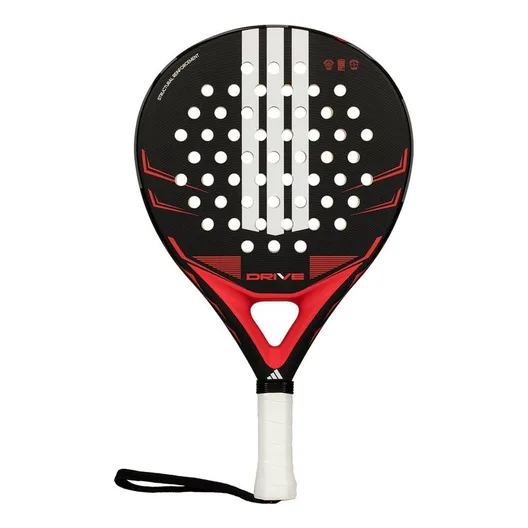
8adidasDrive Blackapprox. €70Round360–375 g–SoftGlasfaser66767
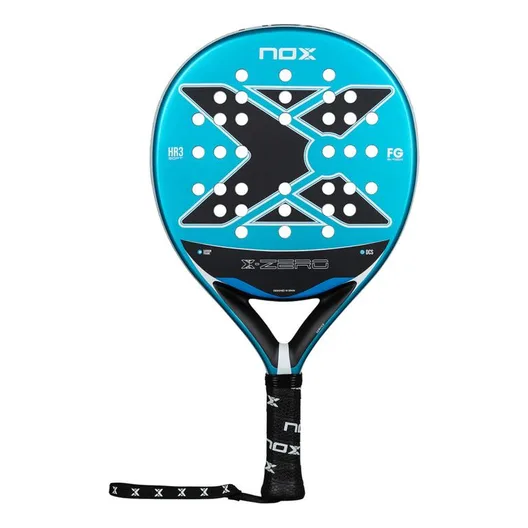
9NoxX-Zero Blueapprox. €60Round350–360 g–SoftGlasfaser 3K57877

Typical street price when the list was updated · Scale 1–10, my assessment

The ranking

  1. 01
    #1 · Best overall for beginners

    Bullpadel Ionic Light 2026

    approx. €116

    Best for: Beginners and improving players who want a light, versatile racket with a forgiving sweet spot and can spend a little more.

    Ratings

    Power6
    Control8
    Comfort8
    Sweet spot8
    Handling9

    Specs

    Shape
    Hybrid
    Weight
    350–360 g
    Balance
    –
    Feel
    Soft
    Face
    Glaphite (Glasfaser-Graphit)
    Level
    Beginner, Intermediate
    • Pros
    • Light and very easy to handle
    • Lively rebound makes depth easy
    • Forgiving sweet spot
    • Cons
    • Little smash power
    • Pricier than most beginner rackets

    My verdict: The Ionic Light is light, soft and helps you hit deep without much effort. Because it is designed for beginners and intermediates, it grows with you for a while. If you're happy to spend a little over €100, it's my best starting point; the Wilson Optix V2 Lite costs less.

    Not currently stocked at Tennis-PointBuy used on the racket exchange↑ Back to overview
  2. 02
    #2 · Best handling

    Nox Equation Soft Advanced 2026

    approx. €135

    Best for: Beginners and improvers who want a light, soft round racket with a carbon frame that they won't outgrow quickly.

    Ratings

    Power6
    Control8
    Comfort9
    Sweet spot8
    Handling9

    Specs

    Shape
    Round
    Weight
    350–365 g
    Balance
    Low
    Feel
    Soft
    Face
    Glasfaser
    Level
    Beginner, Intermediate
    • Pros
    • Extremely manoeuvrable thanks to low balance
    • Soft, comfortable HR3 core
    • Carbon frame adds durability
    • Cons
    • Limited power on overheads
    • 2026 stock running out, 2027 version launched

    My verdict: The Equation Soft Advanced is round, soft and head-light, exactly what makes the first steps easy. It is also built solidly enough that you'll keep playing it once you improve. I'd take it if handling and comfort matter more to you than raw power.

    Not currently stocked at Tennis-PointBuy used on the racket exchange↑ Back to overview
  3. 03Wilson Optix V2 Lite
    #3 · Most comfortable

    Wilson Optix V2 Lite 2026

    approx. €90

    Best for: Newcomers who want a very light, soft round racket for under €100 that is easy on the arm.

    Ratings

    Power6
    Control7
    Comfort9
    Sweet spot9
    Handling9

    Specs

    Shape
    Round
    Weight
    350–360 g
    Balance
    –
    Feel
    Soft
    Face
    Glasfaser
    Level
    Beginner
    • Pros
    • Very light and manoeuvrable
    • Large, forgiving sweet spot
    • Soft, comfortable feel
    • Cons
    • Little power for smashes
    • Outgrown as your technique improves

    My verdict: The Optix V2 Lite makes the first months as comfortable as possible: light, soft and with a big sweet spot. For around €90 you get plenty of comfort but little power. I'd choose it if an arm-friendly feel matters most and you're fine with upgrading later.

  4. 04
    #4 · Most forgiving

    Dunlop FX Start 2026

    approx. €80

    Best for: Beginners on a small budget who want a forgiving, soft racket with an easy, lively ball exit.

    Ratings

    Power6
    Control8
    Comfort9
    Sweet spot9
    Handling8

    Specs

    Shape
    Teardrop
    Weight
    360–370 g
    Balance
    Medium
    Feel
    Soft
    Face
    Glasfaser
    Level
    Beginner
    • Pros
    • Very forgiving sweet spot
    • Soft, comfortable feel
    • Easy depth thanks to lively rebound
    • Cons
    • Limited power
    • Few independent reviews so far

    My verdict: The FX Start forgives mishits better than almost any other starter racket and costs under €80. Its lively rebound sends the ball deep without much effort. I'd recommend it to beginners who want to enjoy rallies quickly; just bear in mind that there are few independent reviews so far.

    Not currently stocked at Tennis-PointBuy used on the racket exchange↑ Back to overview
  5. 05
    #5 · Best all-rounder under €90

    HEAD Evo Extreme 2026

    approx. €70

    Best for: Beginners who want a balanced Head teardrop with Extreme-line looks for around €70.

    Ratings

    Power6
    Control7
    Comfort7
    Sweet spot7
    Handling7

    Specs

    Shape
    Teardrop
    Weight
    355–365 g
    Balance
    Medium
    Feel
    Medium
    Face
    Glasfaser
    Level
    Beginner
    • Pros
    • Balanced, easy-going feel
    • Durable build from a major brand
    • Often available for about €70
    • Cons
    • Limited power and spin
    • Basic materials limit precision

    My verdict: The Evo Extreme isn't a specialist but an honest all-rounder: nothing stands out, but nothing gets in the way either. For the money you get a durable teardrop from a major brand that lets you learn every shot. I'd take it if you don't want to commit to a playing style yet.

    Not currently stocked at Tennis-PointBuy used on the racket exchange↑ Back to overview
  6. 06
    #6 · Best control under €90

    Bullpadel Indiga CTR 2026

    approx. €70

    Best for: First-time players who want a durable, control-first round racket from a big brand for under €90.

    Ratings

    Power6
    Control7
    Comfort8
    Sweet spot7
    Handling7

    Specs

    Shape
    Round
    Weight
    360–370 g
    Balance
    Low
    Feel
    Soft
    Face
    Polyglass (Glasfaser)
    Level
    Beginner
    • Pros
    • Control-oriented round shape
    • Soft, comfortable core
    • Cheap and widely available
    • Cons
    • Heavier than many entry rackets (360–370 g)
    • Less power and feel than carbon models

    My verdict: The Indiga CTR is a simple, solid start: round, soft and built for control. It is, however, heavier than many other entry rackets. If that doesn't bother you, I'd happily take it for your first months; the Wilson Optix V2 Lite is the lighter option.

    Not currently stocked at Tennis-PointBuy used on the racket exchange↑ Back to overview
  7. 07Star Vie Arkos
    #7 · Softest feel

    Star Vie Arkos 2026

    approx. €90

    Best for: Beginners who prioritise a very soft, arm-friendly feel and easy control.

    Ratings

    Power5
    Control7
    Comfort9
    Sweet spot7
    Handling7

    Specs

    Shape
    Round
    Weight
    350–366 g
    Balance
    Low
    Feel
    Soft
    Face
    Glasfaser (X-Glass Tech)
    Level
    Beginner
    • Pros
    • Very soft and arm-friendly
    • Low balance for easy handling
    • Currently heavily discounted, often under €100
    • Cons
    • Low power
    • Being sold off, last units only

    My verdict: The Arkos is one of the softest rackets I compared, which makes it a good choice if you want to spare your arm or simply enjoy a pleasant feel. Don't expect power. As it is currently being sold off at heavy discounts, I'd buy it while it's still available.

  8. 08adidas Drive Black
    #8 · Most stable starter

    adidas Drive Black 2026

    approx. €70

    Best for: Casual beginners and returning players who want a stable, low-cost round racket without big demands.

    Ratings

    Power6
    Control6
    Comfort7
    Sweet spot6
    Handling7

    Specs

    Shape
    Round
    Weight
    360–375 g
    Balance
    –
    Feel
    Soft
    Face
    Glasfaser
    Level
    Beginner
    • Pros
    • Stable and predictable
    • All-fibreglass build is comfortable
    • Low price
    • Cons
    • Small sweet spot for a round racket
    • Little power and bite

    My verdict: The Drive Black is a stable, predictable racket for anyone who plays now and then and doesn't want to spend much. For a round racket, though, it isn't very forgiving. If you plan to play regularly, I'd rather go for the Dunlop FX Start, which forgives mishits much better.

  9. 09Nox X-Zero Blue
    #9 · Cheapest pick

    Nox X-Zero Blue 2026

    approx. €60

    Best for: Absolute beginners on a tight budget who want a soft, controllable round racket with a carbon frame.

    Ratings

    Power5
    Control7
    Comfort8
    Sweet spot7
    Handling7

    Specs

    Shape
    Round
    Weight
    350–360 g
    Balance
    –
    Feel
    Soft
    Face
    Glasfaser 3K
    Level
    Beginner
    • Pros
    • One of the cheapest branded rackets
    • Carbon frame for durability
    • Soft and easy to control
    • Cons
    • Very little power
    • Often sold out

    My verdict: The X-Zero Blue is the cheapest route to a branded racket that still feels decent: soft, controllable and with a carbon frame. It has hardly any power. For your first hours on court I'd happily take it, as long as you can still find one.

What matters in your first padel racket

  • Shape: round or teardrop. The sweet spot is central and large, and the racket forgives off-centre hits. Diamond isn't a beginner shape.
  • Core: soft. Soft foam speeds up slow balls and cushions shots that don't come off cleanly.
  • Balance: low to medium, i.e. more towards the handle. That keeps the racket manoeuvrable and easy to swing.
  • Weight: 350 to 370 grams is right for most adults. If you don't have much strength in your arm, go for the lighter end.
  • Face: fibreglass. It's softer and cheaper than carbon, and the better choice when you're starting out.

Round or teardrop?

Round, if you want to play safe and protect your arm. Round rackets such as the Nox Equation Soft Advanced, the Wilson Optix V2 Lite or the Bullpadel Indiga CTR have the biggest sweet spot and plenty of control.

Teardrop, if you're coming from tennis or squash and already have a decent stroke. The Dunlop FX Start and the HEAD Evo Extreme give you a bit more drive without becoming unpredictable. The Bullpadel Ionic Light is a hybrid that sits in between.

How much should your first racket cost?

Between €60 and €150. All the major brands make rackets in this range that are designed specifically for beginners. Below that, rackets quickly get hard and unpleasant to play with; above it, you're paying for features that won't do much for you at the start.

Right now many 2026 models are reduced because the 2027 versions are already out. That's why some beginner rackets, such as the Nox X-Zero Blue and the Star Vie Arkos, are no longer available everywhere in every colour.

Buying second-hand: often the smartest first purchase

A one-year-old racket for half the new price is often the best choice, especially if you're not yet sure how often you'll play. Check for cracks in the frame, a dull sound when you tap the face (a sign of a damaged core) and loose spots on the grip. On the Padelradar racket marketplace, players sell directly to other players.

When it's time for your next racket

Not because your racket is a year old, but when you play regularly and notice you're lacking pace or precision. Once you're comfortable playing off the walls and practising the bandeja and vibora in training, it's worth looking at the best padel rackets for intermediate players. Typical buying mistakes are covered in my article on mistakes to avoid when buying a padel racket.

How I chose

I compared 48 padel rackets available in Germany and Spain in November 2026 and, for this list, only included models that the manufacturers explicitly recommend for beginners. My sources are the manufacturers' product pages, independent reviews from major padel magazines and shops, player reports and the prices of large retailers on 2 November 2026.

The scores from 1 to 10 for power, control, comfort, sweet spot and handling are my own assessment, not a lab test. For beginner rackets I gave comfort, sweet spot and handling more weight than power, and price counts too. Prices are street prices and vary from retailer to retailer.

T

Timo, Padelradar
I play padel myself, run Padelradar and build these lists by comparing manufacturer specs, retailer data and the ratings of major review sites. There are no paid placements.

More best-of lists

Frequently asked questions about padel rackets for beginners

›What is the best padel racket for beginners?

In my comparison the Bullpadel Ionic Light comes out on top: soft, manoeuvrable, with a large sweet spot and available for around €115. If you want even more comfort, go for the round Wilson Optix V2 Lite at around €90. The cheapest good way in is the Nox X-Zero Blue at around €60.

›Round or teardrop: which shape is best for beginners?

Round if you want to play safe and protect your arm, teardrop if you're coming from tennis and already have a decent stroke. Diamond isn't a beginner shape: the sweet spot sits high, the racket is head-heavy, and mishits end up out of the court or in your arm.

›How heavy should a beginner padel racket be?

For most adults 350 to 370 grams; for players without much strength in the arm, more like 340 to 360 grams. Balance matters more than the number: for beginners it should be low to medium, i.e. towards the handle.

›How much should I spend on my first padel racket?

€60 to €150. In this range, all the major brands make fibreglass rackets with a soft core that are built specifically for beginners. Much cheaper rackets are often hard and unpleasant to play with; much more expensive ones tend to punish mistakes rather than forgive them.

›Carbon or fibreglass for beginners?

Fibreglass. It's softer, cheaper and more forgiving. Carbon is stiffer and more precise, but unforgiving on poor hits. All nine rackets on this list have a fibreglass face.

›Can I use a pro racket as a beginner?

You can, but you shouldn't. Pro rackets are usually diamond or hybrid models with a hard core and high balance, built for players who almost always hit the ball in the centre. If you don't hit it in the centre, a pro racket gives you neither control nor comfort.

›Is a second-hand racket worth it for beginners?

Yes, often even more than a new one. Check for cracks in the frame, a dull sound when you tap the face and loose spots on the grip. On the Padelradar racket marketplace, players sell directly to other players.

Links marked * are partner links to Tennis-Point. If you buy through them I earn a small commission at no extra cost to you. They do not affect the ranking. Product photos: Tennis-Point.

Best Padel Rackets for Beginners 2026: 9 Picks | Padelradar